You have built a beautiful website. You have set up your hosting. You have even started your email list. But when you check your analytics, the graph is flat.
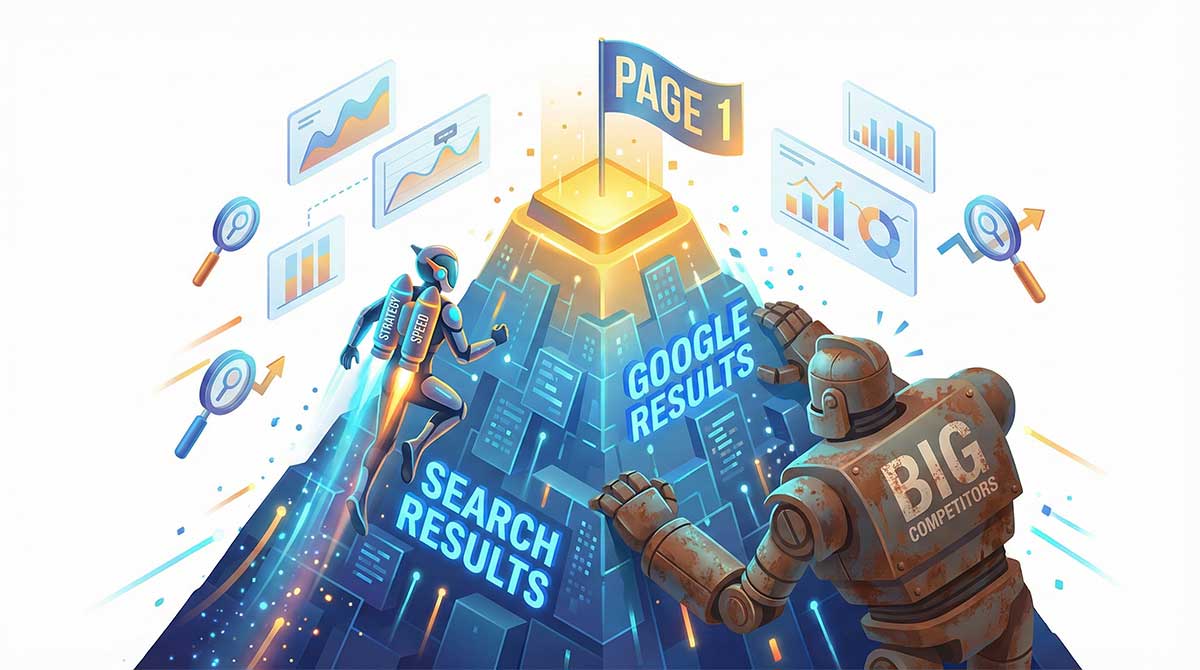
Ranking a brand-new website on Google in 2026 feels like trying to climb Mount Everest in flip-flops. You are competing against giants—massive established brands with million-dollar marketing budgets and ten-year-old domains.
How can a startup or a new blog possibly compete?
The truth is, you cannot beat them at their own game. If you try to rank for broad keywords like “Best Shoes” or “Web Hosting,” you will lose. But you can win if you change the battlefield.
In 2026, Google’s AI-driven algorithms prioritize User Experience and Specific Intent over raw domain age. This is your advantage.
Here is your 5-step blueprint to taking a fresh domain from “invisible” to “ranking” without spending a fortune on ads.
Step 1: Technical Speed is Your Ticket to Entry
Before you write a single word of content, you must ensure your technical foundation is solid. In 2026, Core Web Vitals (Google’s metrics for speed and stability) are not just tie-breakers; they are gatekeepers.
If your website takes 3 seconds to load, Google won’t just rank you lower; users will bounce before they even see your headline.
The “Speed First” Checklist:
-
Hosting Matters: SEO starts at the server level. Cheap, overcrowded hosting leads to “Time to First Byte” (TTFB) delays. Using a performance-optimized provider like Bluechipspace ensures your server response time is lightning fast.
-
Mobile First: Google indexes the mobile version of your site. If your desktop site looks great but your mobile site is clunky, you will not rank.
-
Image Optimization: Never upload raw images. Use tools to compress them into “Next-Gen” formats like WebP before uploading.
Step 2: Target “Zero-Competition” Keywords
New websites often fail because they target keywords they have no business targeting yet.
Do not target “Digital Marketing Tips” (Difficulty: 90/100). Target “Digital marketing tips for dental clinics in [City Name]” (Difficulty: 20/100).
The Long-Tail Strategy
This is called “Long-Tail SEO.” These phrases have lower search volume, but the people searching for them are highly specific and ready to take action.
-
Broad Keyword: “Vegan Protein” (You won’t rank).
-
Long-Tail Keyword: “Best pea protein powder for runners with sensitive stomachs” (You CAN rank).
Use tools like Google Auto-Suggest (just type into the search bar and see what comes up) to find these specific questions.
Step 3: Write for “E-E-A-T” (Experience is Key)
With the rise of AI-generated content, the internet is flooded with generic articles. To combat this, Google now heavily weighs E-E-A-T: Experience, Expertise, Authoritativeness, and Trustworthiness.
The most important addition for 2026 is Experience.
How to Show Experience:
-
Don’t just research; do. If you are reviewing a product, take a photo of yourself holding it.
-
Use “I” statements. “When I tested this software, I found that…” is better than “The software features include…”
-
Share failures. AI rarely talks about mistakes. Sharing a personal story of how you failed at something and what you learned builds massive trust with readers (and Google).
Step 4: Master the “Internal Link” Web
You might not have other websites linking to you yet (Backlinks), but you can link to yourself. This is an underrated strategy.
Think of your website like a spiderweb. If your pages are not connected, the “Google Spider” cannot crawl from one to the other.
The Topic Cluster Method:
-
Write one “Pillar Page” (a long, broad guide, like “The Ultimate Guide to Coffee”).
-
Write 5-10 “Cluster Posts” (specific topics, like “French Press vs. Pour Over,” “Best Beans for Cold Brew,” etc.).
-
Link them all together. Every cluster post should link back to the Pillar Page, and the Pillar Page should link to every cluster post.
This tells Google, “We are experts on this entire topic,” which boosts the ranking of all those pages.
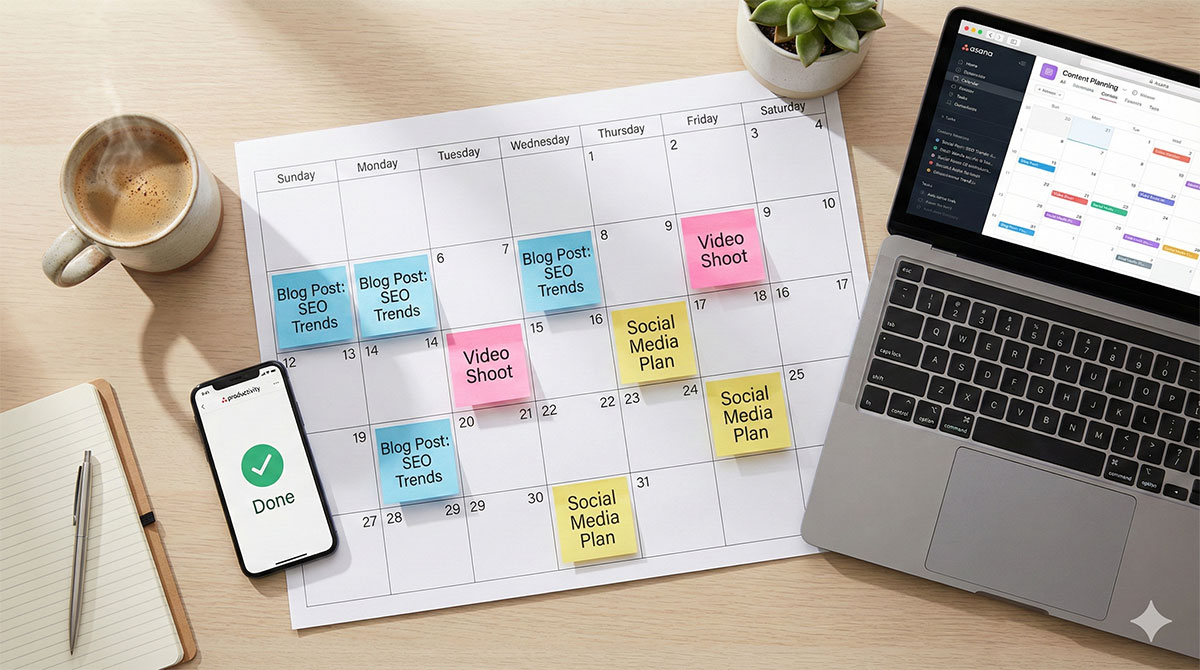
Step 5: Update Content Regularly (Freshness Factor)
Google loves fresh content. A “published date” from 2022 looks stale in search results.
You don’t always need to write new posts. Go back to your old posts every 3-6 months and:
-
Update the year in the title (e.g., changing “2025” to “2026”).
-
Add a new paragraph with recent statistics.
-
Check for broken links.
This signals to Google that your site is alive and maintained, often resulting in a quick rankings boost.
Conclusion: SEO is a Marathon, Not a Sprint
SEO is frustrating because it is slow. You might do everything right today and not see the results for three months. That is the “Sandbox Period” for new domains.
But unlike social media, where your post disappears in 24 hours, an SEO-optimized article can bring you traffic for years.
Start with a fast server from Bluechipspace, target specific questions your customers are asking, and write from personal experience. If you do this consistently, you won’t just be chasing traffic—you’ll be building an empire.