You have launched your new website. The design is crisp, your hosting (hopefully with Bluechipspace) is fast, and your content is ready. Now you are waiting for the traffic to convert into loyal fans or customers.
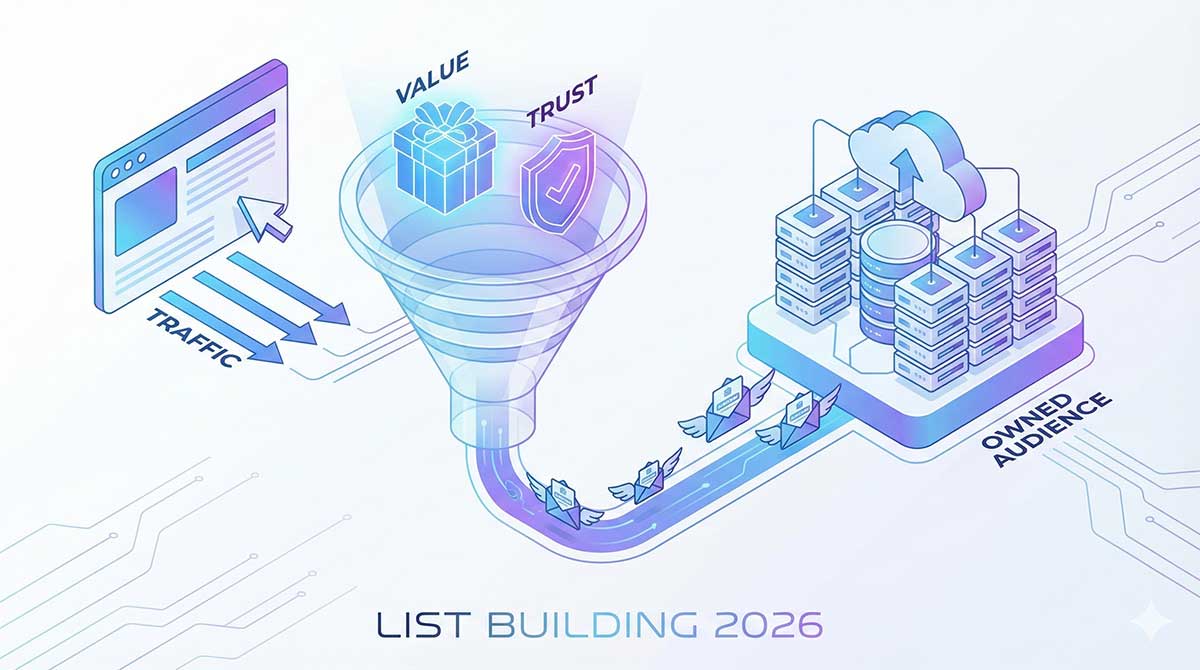
In the digital landscape, many new website owners make a critical mistake: they focus all their energy on building social media followings. While social media is great for discovery, it has a fatal flaw—you don’t own the audience. An algorithm change tomorrow could wipe out 50% of your reach instantly.
An email list is different. It is the only digital asset you truly own.
It is a direct line to your audience, free from gatekeepers. It has a higher ROI (Return on Investment) than almost any other marketing channel. But in an era where everyone’s inbox is overflowing, how do you convince a stranger visiting your new site to hand over their precious email address?
You don’t do it by asking them to “Subscribe to my newsletter.” That strategy died years ago.
In this guide, we will walk through the proven, value-first strategies for building a high-quality email list from scratch in 2026.
The Golden Rule: Value Exceeds “The Ask”
Before we touch on tactics, we must understand the psychology of the modern user. People are fiercely protective of their privacy and their inbox space.
Today, an email address is a form of digital currency. If you want someone to “pay” you with their email address, you must offer them something of equal or greater value in return immediately.
If your strategy is simply having a “Sign Up” button in your footer, you will fail. Your strategy must shift from “asking” to “offering.”
Step 1: Create an Irresistible “Lead Magnet”
A Lead Magnet (also called an “opt-in bribe” or “freebie”) is the valuable item you give away in exchange for an email address. It is the cornerstone of list building.
A great lead magnet in 2026 must solve a specific, immediate problem for your target audience. It needs to provide a “quick win.”
Characteristics of a High-Converting Lead Magnet:
-
Specific: Don’t offer “How to get healthy.” Offer “The 5-Minute Morning Stretching Routine for Back Pain.”
-
Instant Gratification: The user should be able to consume it and get value within 10 minutes of downloading it.
-
High Perceived Value: It should feel like something you could charge money for, but aren’t.
-
Relevant: It must be directly related to the content of your website.
4 Proven Lead Magnet Ideas for New Sites:
1. The Checklist or Cheat Sheet
People love structure. If you write a long, complex blog post (like “How to launch a WordPress site”), create a downloadable 1-page PDF checklist summarizing the steps. It saves the reader time.
2. The Resource Library or Toolkit
Curate a list of the best tools, books, or resources in your niche. For example, a design blogger could offer “My Top 20 Free Font Sources for Projects.”
3. The Mini-Course (Email Drip)
Instead of a download, offer a 5-day email course. “Sign up for my free 5-day course on Mastering SEO Basics.” This is excellent because it trains your new subscribers to open your emails every day for a week.
4. Exclusive Templates
Give your audience a shortcut. If you are in finance, offer a “Monthly Budget Excel Sheet.” If you are in marketing, offer “5 Fill-in-the-Blank Social Media Caption Templates.”
Step 2: Strategic Placement of Opt-In Forms
You have a great lead magnet. Now, where do you put the sign-up form so people actually see it? You need a mix of passive and active placements.
The “Above the Fold” Feature Box
Don’t bury your offer. The highest converting real estate on your website is the top half of your homepage. Consider a large, visually appealing banner right below your main menu that highlights your lead magnet with a clear call-to-action (CTA).
Inline Content Forms
If a reader is halfway through your blog post, they are engaged. This is the perfect time to present a relevant offer. Place a sign-up form in the middle or at the very end of your high-performing blog posts.
The “About Page” Conversion
Your “About” page is often one of the most visited pages on a new site. People go there to see if they can trust you. Once you’ve told your story and established credibility, end the page with an invitation to join your list.
The Exit-Intent Popup (Used Ethically)
Popups are annoying, but they work—if used correctly. In 2026, do not use popups that appear immediately when someone lands on your site. It’s intrusive and hurts your Google rankings on mobile.
Instead, use an Exit-Intent Popup. This technology tracks user mouse movement and only triggers the popup when it detects the user is about to close the tab or leave the site. It’s a final “Hail Mary” offer: “Wait! Before you go, download this free checklist…”
Step 3: The Opt-In Process and Privacy (Crucial in 2026)
How someone joins your list matters just as much as why they join.
Single Opt-in vs. Double Opt-in
-
Single Opt-in: The user enters their email and is instantly added to the list. It’s faster, but leads to lower quality emails and more spam complaints.
-
Double Opt-in (Recommended): The user enters their email, then receives an automated email asking them to click a link to confirm their subscription.
While double opt-in adds an extra step, it ensures that every subscriber actually wants to be there. This improves your email open rates and ensures better deliverability in the long run.
Privacy is Non-Negotiable
With regulations like GDPR (Europe) and CCPA (California) setting the global standard, you must be transparent.
Your opt-in forms should include a small line of text indicating that by signing up, they agree to receive marketing emails from you, along with a link to your Privacy Policy. Being upfront about privacy builds trust instantly.
Step 4: The Welcome Email (The Most Important Email You’ll Send)
The moment someone confirms their subscription, your Email Service Provider (ESP) must send an automated “Welcome Email.”
This email will have the highest open rate of any email you ever send (often over 50%). Do not waste this opportunity with a generic “Thanks for subscribing.”
Your Welcome Email Must Do Three Things:
-
Deliver the Lead Magnet immediately: Give them the link to the download right at the top. fulfill your promise instantly.
-
Set Expectations: Tell them what’s next. How often will you email them? (e.g., “Expect fresh tips every Tuesday morning”). What kind of content will you send?
-
Ask a Question (The Engagement Hack): Ask them a simple, open-ended question and tell them to reply to the email. For example: “What is your biggest struggle with [your topic] right now? Hit reply and let me know—I read every email.”
When a subscriber replies to your first email, it signals to Gmail, Outlook, and other providers that your emails are important, keeping future emails out of the Spam folder.
Conclusion: Patience and Consistency Wins
Building an email list from scratch is not an overnight event. Your first 100 subscribers will be the hardest to get.
But remember this: a list of 100 highly engaged people who trust you and open your emails is infinitely more valuable than 10,000 random social media followers who scroll past your posts.
Focus on creating a genuinely helpful lead magnet, place your forms strategically, and treat every new subscriber like a VIP. Start today, and a year from now, your email list will be the most powerful engine in your business.